← All guides

Owner's Guide

Remote Security for Interstate Landlords: Protecting a Darwin Rental From 3,000 km Away

A large share of Darwin's rental stock is owned from Sydney, Melbourne, Brisbane and Adelaide — investors who might see the property once a year, if that. That distance is manageable while a good tenant is in place. It becomes a real exposure in the gaps: between tenancies, during renovations, or when a property sits vacant through the wet season.

Get a Quote

We install and look after security for interstate owners across Darwin and Palmerston. This is how the arrangement works when it's set up properly — and what tends to go wrong when it isn't.

The actual risk profile of a Darwin rental

Worth being clear-eyed rather than alarmist. Property crime in Darwin is genuinely elevated — NT Police figures for May 2026 recorded 497 property offences in the Darwin urban area in a single month, including 48 house break-ins — and vacant houses are disproportionately represented. A rental between tenancies advertises itself: empty carport, mail buildup, lawn getting away, no lights. From interstate you have no way of knowing anything is wrong until the property manager's next visit.

The wet season sharpens this twice over. Vacancy periods traditionally cluster around the end of the year — tenants move around Christmas and the school-year changeover, exactly when storms, outages and weeks of rain are hammering an empty house. And the damage compounds: a break-in that pops a louvre bank in June is a burglary; in January it's a burglary plus a month of monsoon rain through the opening before anyone stands in the room.
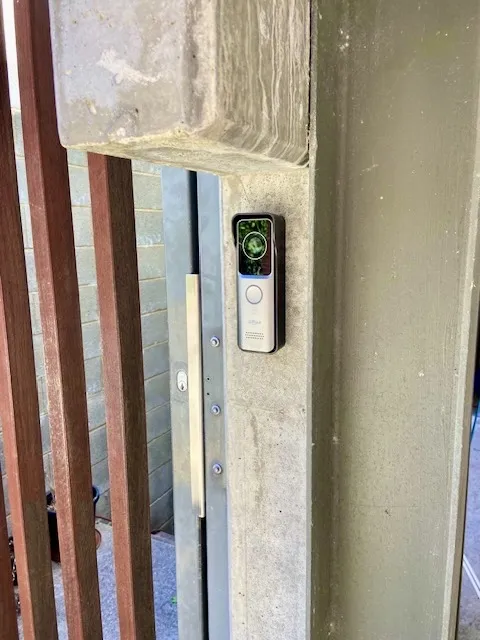
Video doorbell installed at a rental property entry — answer the door from anywhere

What remote monitoring actually looks like

Cameras you can check from your phone

A modest, properly installed camera system gives an interstate owner what they actually need: the ability to look at the property right now, from anywhere.

  • Between tenancies: a daily thirty-second check replaces wondering. You see the intact house, the dry carport, the lawn contractor who did or didn't show.
  • During occupancy, cameras must respect the tenancy. The workable standard: external cameras covering entries and the driveway, positioned and disclosed appropriately, with the tenant aware — never coverage of private living areas. Many owners simply run recording only during vacant periods; the infrastructure sits ready either way. Set expectations in the lease and through your property manager.
  • 4G-connected cameras solve the vacant-property internet problem — no active NBN plan needed. Our 4G security cameras page covers the options; between tenancies the home broadband is usually disconnected, which strands ordinary Wi-Fi cameras precisely when you need them.
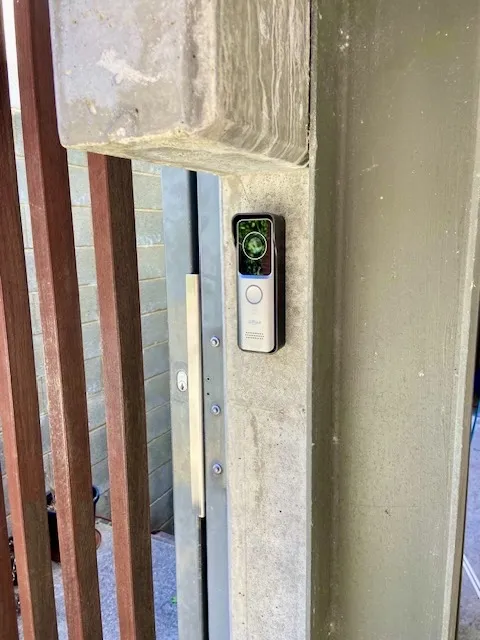
Video doorbell installed at a property gate for remote answering

A monitored alarm for the response

Cameras tell you what happened; a monitored alarm makes something happen. For a vacant property, monitoring with dual-path (internet + 4G) reporting means an activation, a mains failure or a low battery gets acted on — patrol response or keyholder contact — while you're in a meeting in Sydney. Mains-fail alerts matter more than most owners expect: in the wet, they're also your early warning that the fridge, the aircon-dry cycle and the camera recorder in an empty house have gone dark.

Sensors beyond intrusion

For an empty house in the wet, the cheapest sensors earn the most: flood sensors in wet areas, and temperature reporting from the panel that tells you the aircon or the roof has failed while the house sits shut and cooking mould. Water damage in an unventilated vacant home over the wet routinely costs more than a break-in — insurers know it, and some policies get harder about extended vacancy periods, so check your disclosure obligations and consider what monitoring evidence does for you at claim time.

Coordinating an install without flying up

The process we run for interstate owners, refined to not need you here:

1

Scope by video

Photos or a video walkthrough from you or your property manager; we quote from that plus our own site look. Itemised quote by email.

2

Access through the property manager

We coordinate entry notice (if tenanted), key pickup and attendance directly with the PM. Tenanted installs are routine when notice is handled properly.

3

Commissioning to your phone, not to paper

The job is finished when the app is live on your phone in another state, you've watched live footage, armed and disarmed remotely, and received a test notification — not when we pack up.

4

Handover pack

To you and the PM: what's installed and where, how tenants use the alarm, who to call for faults.

5

Local servicing afterwards

Gear in Darwin conditions needs an annual once-over — batteries, seals, corrosion, storm readiness. You shouldn't need to think about it beyond approving the visit.

Our CCTV cost guide covers what drives pricing for a system like this.

Working with your property manager, not around them

The setups that work long-term make the PM's job easier rather than adding to it:

  • The PM stays the first keyholder contact for alarm events — they're local, they have keys, they have the tenant relationship.
  • Alarm codes are managed per-tenancy: a new tenant means a fresh code, done remotely in minutes on a modern panel, not a technician visit.
  • Routine inspection photos and camera checks are complements, not substitutes. The PM sees inside quarterly; your cameras see the exterior daily. Between tenancies, that combination is full coverage.
  • Give the PM our contact details for faults. A false-alarm issue fixed early is invisible; the same issue left until it wakes the neighbours costs you goodwill and possibly a tenant.

Get a Quote

Tell us about your property and we'll come back with practical options and honest pricing.

Interstate Owner Questions

Can I put security cameras on a tenanted rental property?
External cameras covering entries and approaches are workable when they are disclosed to the tenant, avoid private living areas, and sit within your tenancy obligations — coordinate through your property manager and reflect it in the lease. Many owners record only during vacant periods.
How do cameras work at a vacant property with no internet?
4G cameras or a 4G-connected recorder run over the mobile network on their own data plan — no NBN account needed. This is the standard fit for between-tenancy monitoring in Darwin.
What happens when a storm knocks the power out at my vacant property?
A monitored panel reports the mains failure and runs on battery; UPS-backed cameras ride through shorter outages. You know within minutes, instead of discovering a week of spoiled, unmonitored downtime later.
Do I need to be in Darwin for the installation?
No. We scope from photos and a property-manager walkthrough, coordinate access with your property manager, and commission the system to your phone interstate. The whole process is designed to run without you on-site.
Is the wet season really riskier for a vacant rental?
Yes, on two fronts: end-of-year vacancy periods coincide with peak storm months, and any breach — break-in or storm damage — compounds fast when monsoon rain reaches an empty interior. Remote eyes on the property matter most November through March.
Who responds if the alarm goes off while I am interstate?
Whoever you nominate — typically patrol response through the monitoring arrangement and your property manager as keyholder. The point of monitoring is that the response chain runs without you.

Set it up once, stop worrying

We install and service home security for interstate owners across Darwin and Palmerston — 4G cameras, monitored alarms, PM coordination and local servicing, commissioned to your phone wherever you are.

Get a Quote