← All guides

Industrial & Commercial

Security for Mining Operations, Contractors and Government Suppliers in the NT

Territory industry runs on assets that sit a long way from anyone watching them: laydown yards on the Stuart Highway, compounds outside Katherine, exploration camps with a two-hour airstrip transfer, plant parked at a Darwin depot between swings. The threat is rarely sophisticated — it's opportunistic theft of fuel, copper, tools and vehicles from sites that are dark, remote and predictably empty.

Get a Quote

We design and install security for industrial operators, contractors and suppliers across the NT: compounds, yards, depots and remote sites. Here's how we approach each, and what actually works out here.

Site compounds and depots

The Darwin, Palmerston and Katherine depot is the bread-and-butter industrial site: workshop, office dongas, secure store, fuel, fleet parking behind chain-link. The standard weaknesses are equally predictable — one camera on the office door, a shared gate padlock, and nothing at the rear boundary where the actual entries happen.

What a properly designed compound install covers:

  • Perimeter first. Cameras working the fence line and approaches, not just building doors. Thermal or analytics-driven detection on the boundary means an alert when someone enters the yard — not footage of them leaving with the generator.
  • The gate as a control point. Camera coverage that captures plates and faces at the entry, tied to logged access (fob, PIN or ANPR-assisted) rather than a padlock whose key count nobody knows.
  • High-value zones layered inside the perimeter: fuel storage, the tool store, copper and cable racks, and keys. A second ring of detection on these means the perimeter alert has a follow-up, not just a wide shot.
  • NT-grade hardware throughout — IP66/IP67 housings, surge protection through the camera and recorder chain, UV-stabilised cabling, dust-sealed enclosures inland and stainless fixings on the coast. Industrial sites chew through southern-spec gear even faster than homes do; our business security page covers the commercial baseline.

Laydown yards and temporary sites

Laydown yards are the hardest brief: high-value materials, no buildings, no power, no comms, and a footprint that changes monthly. This is where fixed-infrastructure thinking fails and self-contained systems earn their keep.

  • Solar-powered CCTV trailers and pole units put surveillance anywhere there's sky. Panel, battery bank, cameras and a 4G uplink in one movable package — deployed in hours, relocated as the yard evolves. Detail on our solar-powered CCTV page.
  • 4G transmission means live view and alerts with no trenching and no NBN. Coverage along the highway corridors and around the regional centres supports it; for sites beyond cellular reach, recording happens at the edge and satellite uplink becomes the conversation. See 4G security cameras.
  • Detection-driven alerts, not passive recording. A yard camera that only records gives you evidence of a loss. Analytics that distinguish a person or vehicle from wildlife and moving vegetation — tuned properly for spinifex, buffel grass and heat shimmer, which is genuine tuning work in the Territory — give you an intervention: monitoring response, lights, audible warning, a phone call while the ute is still at the gate.
  • Wet season planning built in: panels sized for weeks of monsoon cloud, mounts rated for storm winds, and units positioned above ground that turns to sheet water in January.

Remote sites: monitoring where nobody is

Exploration camps, comms and infrastructure assets, pump stations, unattended plant — sites that might see a human weekly. Two principles drive the design:

The system must run unattended. Power autonomy through solar and batteries sized for the wet, hardware that tolerates 40-degree days and dust, and remote health monitoring so a failing camera or flat battery bank is a notification, not a surprise discovered a month of blind operation later.

The response has to be designed, not assumed. In Darwin, an alarm activation can be met with a patrol response. Three hours down a station track, the honest response options are: alert-and-assess by camera, remote audio challenge, lighting activation, and a decision chain — site super, monitoring centre, police — agreed before the first activation rather than during it. We design around what response is actually possible at each site, and our rural property security page covers the same logic at station scale.
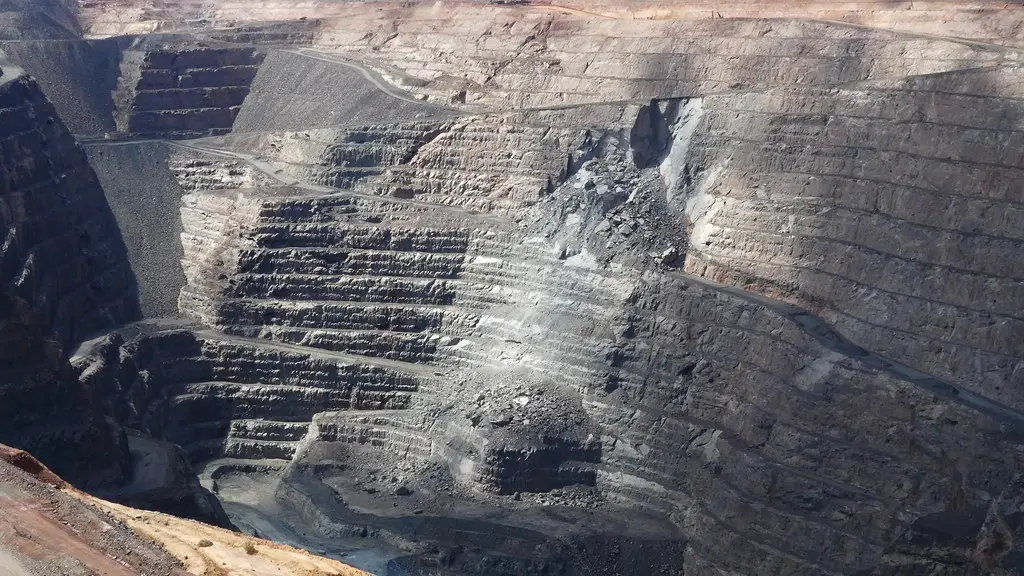

Open-cut mine pit with haul trucks and heavy machinery working below the benches

Staff access control: who's on site, and when

For contractors, access control is as much about compliance and audit as theft:

  • Fobs, PINs or mobile credentials on gates, workshops, stores and offices — individually issued, instantly revoked. A departed employee stops being a risk the moment HR sends the email, with no rekeying and no key retrieval standoff.
  • Time-and-zone rules: stores that only open during shift hours, contractor credentials that expire with the contract, after-hours workshop access limited to named people.
  • An audit trail by default. Every entry logged against a person and a timestamp. When fuel or tools go missing, the conversation starts with a list, not a guess — and when a client or insurer asks who had access to what, the answer is a report, not a recollection.
  • Muster value: knowing who is inside the fence matters for safety as much as security on industrial sites.

Our access control page covers systems from single-gate setups to multi-site credential management.

Staff member tapping an access control card at a reader

Working alongside government and defence-adjacent supply chains

Contractors supplying government projects and operating near defence-related work face a higher bar for physical security — and increasingly, tenders and prequalification questionnaires ask directly about it. Without overstating what commercial security can claim: what we build for these operators is the physical layer that supports a credible answer. Controlled and logged site access, monitored intrusion detection, camera coverage with defined retention, and documentation of all of it — system schematics, credential registers, event logs — in a form you can hand to an auditor or a prime contractor's compliance team.

If your bids keep meeting questions about site security arrangements, the cheapest time to fix the answer is before the next tender, not after losing it.

Get a Quote

Tell us about your property and we'll come back with practical options and honest pricing.

Industrial Site Security Questions

How do you secure a laydown yard with no power or internet?
Self-contained solar CCTV units: panel and battery power, 4G transmission, analytics-based detection and optional audio challenge. Deployed in hours, moved when the yard moves, sized to run through wet-season cloud cover.
Does camera detection work in the bush without constant false alarms?
Yes, when the analytics are tuned for the environment — person and vehicle classification rather than raw motion, with heat shimmer, wildlife and moving vegetation filtered out. Untuned motion detection in the Territory is unusable; tuned classification is reliable.
What happens when an alarm triggers at a site hours from anywhere?
The response is designed per site: camera-based alert verification, remote audio and lighting deterrence, and an agreed escalation chain. For genuinely remote assets, deterrence-plus-evidence is the honest model, and the system is specified around that reality.
Can access control cover a site with contractors coming and going?
That's its core use: individual credentials with expiry dates, zone and time restrictions, instant revocation and a full entry log. Contractor churn is exactly the problem card-based access solves over shared keys.
Will site cameras survive the wet season and the dust?
Specified correctly, yes — IP66/IP67 housings, surge protection end to end, UV-stabilised cabling, sealed enclosures and storm-rated mounting. Most Territory failures trace back to southern-spec gear and installation shortcuts, not the climate being unbeatable.
Do you cover sites outside Darwin?
Yes — we work across the Territory, including Katherine, Alice Springs and remote sites, with remote health monitoring reducing how often anyone needs to attend.

Get a site-specific design

Compound, yard, camp or depot — we scope against how your site actually operates and what response is genuinely available, then build for the conditions.

Get a Quote